Planning your first trip to Taiwan? Taiwan is one of Asia’s most rewarding travel destinations, with spectacular mountain landscapes, vibrant night markets, beautiful temples, incredible food and some of the world’s most convenient public transportation. Before you book, there are a few practical details worth knowing: Taiwan is not as inexpensive as Thailand or some other Southeast Asian destinations, its immigration system is separate from China’s, and having local currency and mobile internet ready will make arrival much easier.
One of the most common misconceptions about Taiwan is that it is as cheap as Thailand, Vietnam, Cambodia or the Philippines. While Taiwan offers excellent value for money, it is generally more expensive than these destinations, particularly when it comes to accommodation, hotels, taxis and organized activities.
Taiwan is a highly developed, high-income economy, not a typical Southeast Asian budget destination.
Taiwan has transformed itself over the last few decades into one of Asia’s most technologically advanced and prosperous economies. It is home to globally important technology companies, a sophisticated semiconductor industry, modern infrastructure, excellent healthcare and a highly educated population. Its development, however, goes well beyond technology.
When travelling around Taiwan, you will notice:
According to Taiwan’s Directorate-General of Budget, Accounting and Statistics, using the methodology of the United Nations Development Programme (UNDP), Taiwan achieved a Human Development Index (HDI) of 0.934 in 2023, ranking 21st in the world. This index considers life expectancy, education and income.
Taiwan’s Central Bank also reported that its GDP per capita reached approximately US$37,827 in 2025. Adjusted for purchasing power parity (PPP), this was equivalent to approximately US$85,127.
For comparison, these are figures associated with highly developed economies rather than typical lower-cost Southeast Asian tourist destinations.
Sources:
Not necessarily. Taiwan can still be an affordable destination, especially if you know where to spend your money. The important difference is that you should not expect Thailand-style prices for everything.
For example, you can still enjoy a delicious bowl of beef noodle soup, explore traditional night markets or take public transportation without spending much money. However, accommodation in Taipei can be considerably more expensive than in Bangkok, and private transportation, organized tours and certain tourist attractions can add up quickly.
Think of Taiwan more as a developed East Asian destination, comparable in many respects to Japan or South Korea, rather than a budget destination like Thailand or Vietnam.
Here are some approximate daily budgets per person:
| Travel style | Daily budget |
|---|---|
| Backpacker | NT$1,500–2,500 |
| Mid-range traveller | NT$3,000–5,500 |
| Comfortable holiday | NT$6,000–12,000+ |
These estimates include accommodation, meals, local transportation and sightseeing, but exclude international flights.
To give you a better idea of what things cost:
Food and drink
Transportation
Accommodation
Prices are indicative and vary depending on the city, season and quality of accommodation.
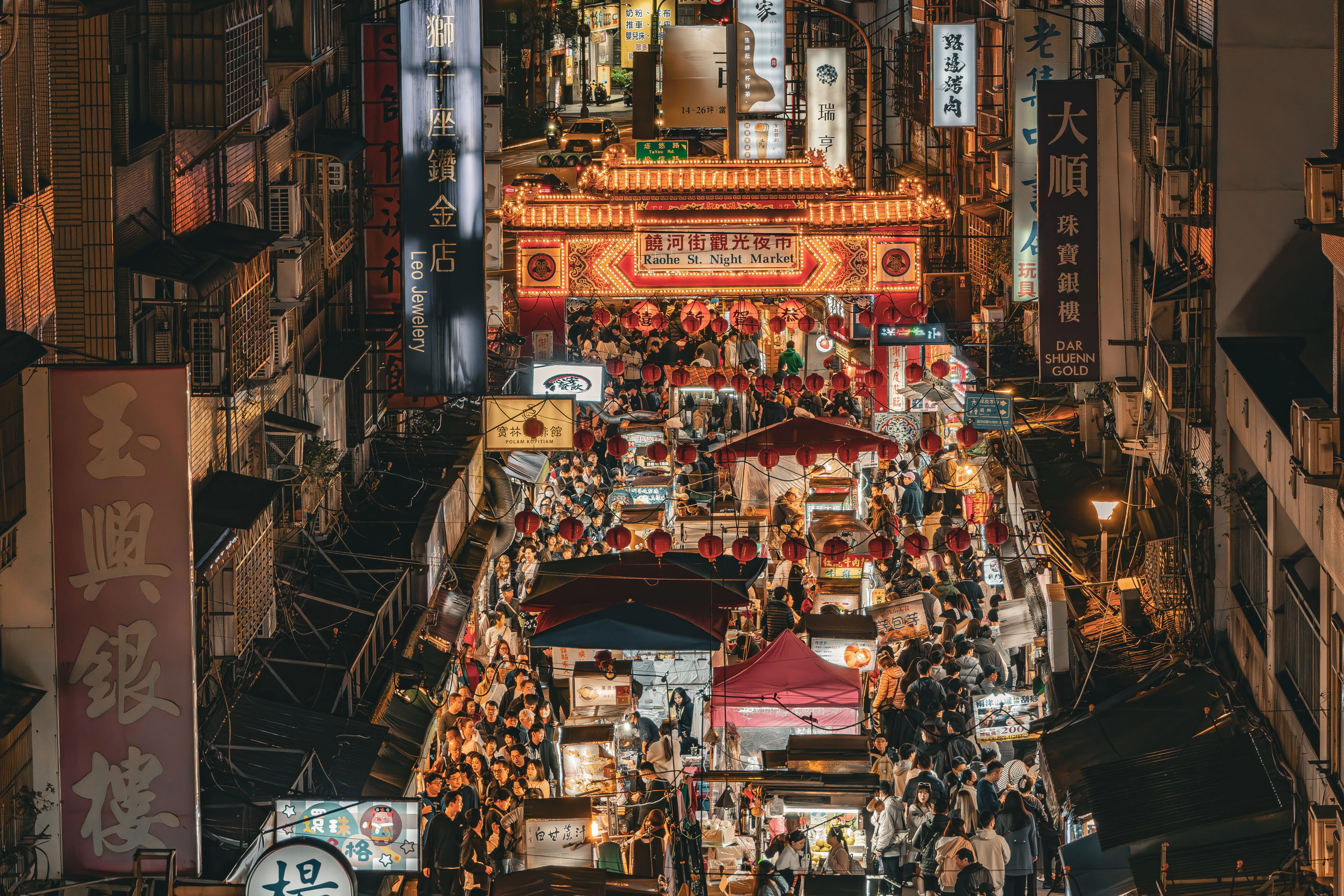
Accommodation is usually the biggest expense, especially in Taipei. Hotel prices can increase considerably during weekends, public holidays and major events. Food and public transportation, on the other hand, are relatively inexpensive. You can enjoy an excellent meal at a local restaurant or explore a night market without spending much money. Travelling around Taiwan can also become more expensive if you rely on taxis or private transportation, particularly when visiting remote mountain areas, the east coast or national parks.
Our advice: If you are travelling on a budget, stay in guesthouses, eat at local restaurants and night markets, and use trains and public transportation whenever possible. Taiwan is a fantastic destination for independent travellers.
Taiwan and the People’s Republic of China have separate immigration systems. Taiwan is self-governed and operates its own border controls, visa policies and entry requirements.
This is particularly important for international travelers who have previously visited China. A Chinese visa does NOT allow you to enter Taiwan. Similarly, a Taiwanese visa does not give you permission to enter China. You must check Taiwan’s entry requirements according to the passport you will use to travel.
It depends on your nationality. Many nationalities can visit Taiwan without applying for a visa in advance:
Other nationalities may need to apply for a visitor visa before travelling.
The visa information below reflects the regulations available as of November 24, 2026. Taiwan’s visa policies and visa-exemption programmes may change, so always verify the latest requirements with the official Taiwan Bureau of Consular Affairs (BOCA) before travelling.
Official Taiwan visa checker: Check visa requirements by nationality on the BOCA website.
Taiwan has different visa arrangements across Latin America and the Caribbean. Some nationalities can enter without a visa, others can apply for an electronic visa (eVisa), and others must obtain a traditional visitor visa.
| Nationality | Visa requirement |
|---|---|
| Chile, Guatemala, Paraguay, Honduras | Visa-free, up to 90 days |
| Dominican Republic, Belize | Visa-free, up to 30 days |
| El Salvador, Haiti, Nicaragua, Saint Kitts and Nevis, Saint Lucia, Saint Vincent and the Grenadines | Visa-free |
| Nationality | Visa requirement |
|---|---|
| Colombia | eVisa, subject to additional eligibility conditions |
| Peru, Ecuador, Panama, Dominica | eVisa |
Examples include:
This is not an exhaustive list. Visa rules can change, and eligibility may depend on the type of passport and individual circumstances. You can check the exact requirements for your nationality using Taiwan’s official country-by-country visa database:
Official Taiwan visa checker: Check visa requirements by nationality on the BOCA website.
If your nationality requires a traditional visitor visa, you generally need to complete an online application and submit the supporting documents to a Taiwanese overseas mission (embassy or representative office).
The typical requirements include:
The exact requirements depend on your nationality and circumstances.
You can start your application through the official Taiwan Bureau of Consular Affairs website:
Official online Taiwan visa application: https://visawebapp.boca.gov.tw/
Select “General Visa Applications” to begin a standard visitor visa application.
Yes, but only certain nationalities qualify.
Taiwan operates an electronic visa programme for selected countries. Some Latin American nationalities, including Colombia, Peru, Ecuador and Panama, are included, although additional conditions apply to some applicants.
An eVisa is normally:
You must receive approval before travelling. Do not assume that submitting an online application means you have permission to enter Taiwan.
Official Taiwan eVisa application: https://visawebapp.boca.gov.tw/
Depending on your nationality and immigration status, you may need:
Immigration officers may ask for additional documentation. Always check your specific passport requirements before booking your trip.
Most foreign visitors must complete the Taiwan Arrival Card (TWAC) online before arriving. The online arrival card should be submitted within seven days before arrival. It is free of charge and replaces the traditional paper arrival card.
Official website: https://twac.immigration.gov.tw/
Be careful with unofficial websites that charge money for this service.
Taiwan has its own currency, the New Taiwan Dollar (NTD or TWD). Foreign currencies are rarely accepted for everyday purchases, so make sure you have some New Taiwan Dollars available when travelling around the island.
Despite being a technologically advanced society, Taiwan is not as cashless as you might expect. Cash is still the preferred payment method at many everyday businesses, including:
Taiwan is still very much a cash country.
You might also see QR-code payment options at shops and restaurants. However, many of these rely on Taiwanese payment applications and local bank accounts, which are not necessarily accessible to international tourists.
Credit and debit cards, including Visa and Mastercard, are generally accepted at:
However, don’t assume you can pay by card everywhere. Even in Taipei, many small businesses still prefer cash.
Our recommendation: Always carry some cash. You will need it much more often than you might expect!
Unlike destinations such as Thailand, Taiwan does not have a network of independent currency exchange shops. Currency exchange is primarily handled by authorized banks and their designated counters. This can be inconvenient if you are used to exchanging money at dedicated exchange shops in tourist areas. Banks generally operate during standard weekday business hours, and exchanging money at a bank branch can involve:
This is not something you want to spend your holiday doing!
The easiest option is to exchange some of your home currency into New Taiwan Dollars at the airport immediately after landing.
At Taoyuan International Airport and other international airports, you will find authorized bank currency exchange counters. You can exchange major international currencies, including US dollars, euros and other supported currencies. Unlike what many travelers expect, airport exchange rates in Taiwan are generally fair and competitive. You do not need to waste time searching for a better rate in the city.
You can exchange enough money to cover your initial expenses and enjoy your holiday without worrying about finding a bank later.
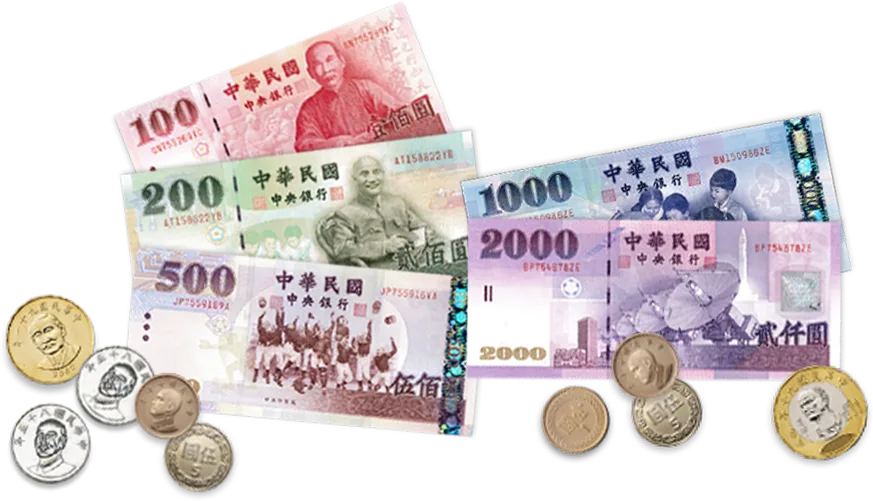
You don’t necessarily need to bring foreign cash to Taiwan; however, we highly advise having some for any emergency situations. Another convenient option is to withdraw New Taiwan Dollars directly from an ATM using your international debit or credit card.
ATMs are widely available, particularly inside:
7-Eleven and FamilyMart are particularly convenient because their ATMs are available 24/7 at many locations throughout Taiwan. International cards are commonly accepted, although you should check compatibility with your bank before travelling. ATM exchange rates are generally competitive, often using the international card network’s exchange rate rather than expensive tourist exchange rates. Keep in mind that your home bank or the ATM operator may charge withdrawal fees. Check your bank’s international withdrawal conditions before travelling.
Important tip: If an ATM or payment terminal offers to charge you in your home currency instead of New Taiwan Dollars, choose NTD. This normally avoids unfavourable dynamic currency conversion rates.
For a typical tourist, we recommend having approximately NT$1,000–2,000 per person available for everyday expenses, with additional cash or access to an ATM for larger purchases and activities. You don’t need to carry all your travel money in cash. Just make sure you have enough to enjoy local restaurants, night markets and small businesses without depending on card payments.
Our final advice: Exchange a small amount of money at the airport or withdraw New Taiwan Dollars from an ATM when you arrive. Both are convenient options, and you can enjoy Taiwan without worrying about finding a currency exchange shop.
Having mobile internet from the moment you arrive will make your trip considerably easier. You will need it for Google Maps, public transportation directions, restaurant searches, translation applications and contacting your accommodation. You have two main options: buy a local SIM card at the airport or install an eSIM before you fly.
This is probably the easiest solution if your phone supports physical SIM cards. At Taoyuan International Airport, you can find telecommunications counters selling prepaid tourist SIM cards.
Major Taiwanese providers include:
Tourist packages generally include unlimited mobile data for a fixed number of days, and some also include local calling credit. Prices depend on the provider, network and duration. As an indication, short-term packages start at a few hundred New Taiwan Dollars. You will normally need your passport and an additional identification document to register your SIM card.
Official provider information: Chunghwa Telecom Tourist SIM and eSIM
If your smartphone supports eSIM technology, this is often the most convenient option. Stay connected throughout your trip without having to queue at the airport SIM card counters. You can purchase an eSIM online before your flight, install it while still at home and activate it when you arrive in Taiwan.
Advantages include:
Arrive in Taiwan already connected. With a Holafly eSIM, you can arrange your mobile data before departure, install the eSIM while you are still at home and activate it when you reach Taiwan. That means no queue at the airport SIM counters and no need to swap your physical SIM card. It is a convenient option for using maps, checking train and bus routes, translating menus and staying in touch during your trip.
Get 5% off your Holafly Taiwan eSIM with our HolaTaipei discount code:
HOLATAIPEI5
Get your Holafly eSIM for Taiwan and save 5%
Disclosure: This is an affiliate link. If you purchase through it, HolaTaipei may earn a commission at no additional cost to you. This helps support our travel guides.
If you are visiting Taiwan independently, an EasyCard (悠遊卡) is one of the most useful things you can buy. It is a rechargeable contactless card that allows you to pay for many types of public transportation without purchasing individual tickets.
You can use it for:
You can purchase an EasyCard at the airport, MRT stations and convenience stores such as 7-Eleven and FamilyMart. Simply add some money to the card and tap it when using public transportation.

One important distinction: the EasyCard does not automatically cover every train service or long-distance journey. High Speed Rail tickets and some reserved train services require separate tickets.
Official information: https://www.easycard.com.tw/en/
Taiwan may look small on a map, but travelling around the island takes longer than many visitors expect. The western corridor has an excellent railway network, including the Taiwan High Speed Rail (THSR), which connects Taipei with major cities such as Taichung, Tainan and Kaohsiung. However, the interior and the east coast is different. Cities such as Hualien and Taitung have fewer transportation options, and some destinations require additional bus journeys or private transportation.
Here are the main transportation options:

If you are planning to visit places such as Taroko Gorge, Alishan, Sun Moon Lake or the east coast, plan your transportation carefully. Some attractions are not easily accessible by public transportation, and a guided tour or private driver may be a better option.
Unlike some Southeast Asian destinations, Taiwan has noticeable seasonal differences.

Taiwan has a subtropical climate in the north and a tropical climate in the south.
If you are planning hiking activities, remember that mountain weather can be very different from the weather in Taipei. Always check weather forecasts and mountain conditions before heading out.
Tipping is generally not customary in Taiwan. You are not expected to leave tips at restaurants, cafés, taxis or most everyday services. Some restaurants include a 10% service charge in the bill.
However, tipping tour guides and drivers is perfectly normal and very much appreciated. If you join a guided tour, especially a private tour, leaving a tip is a nice way to show your appreciation for your guide’s knowledge, professionalism and effort in making your experience memorable.
Tipping is not mandatory, but it is always welcome by tourism professionals.
Our advice: Don’t worry about tipping in your everyday activities, but if you have a great experience with your tour guide, a tip is a lovely gesture!
Taiwan primarily uses Type A and Type B electrical sockets, similar to those found in the United States and Japan. The standard voltage is 110V, although 220V outlets are also used for certain appliances. If you are travelling from Europe, you will probably need a plug adapter. Check that your electronic devices support 110V before plugging them in. Most modern phone chargers, laptop chargers and camera chargers support a wide voltage range.
Taiwan is a fantastic destination, but a little preparation will make your trip much smoother.
And most importantly, don’t limit your trip to Taipei! Taiwan has spectacular mountains, beautiful coastlines, traditional villages, hot springs, incredible food and a fascinating cultural mix waiting to be discovered.
Want to experience more of Taiwan than the usual tourist highlights?
At HolaTaipei Travel, we’re a Taiwan-based team helping visitors discover the island with local knowledge and personal attention. We specialise in private experiences and tailor-made trips for Spanish-speaking and international travellers, with guidance available in Spanish and English.
Whether you have just one day in Taipei or are planning a longer journey around Taiwan, we can help you shape an itinerary that fits your interests, pace and travel style. Explore beyond the capital, discover local culture and food, and make the most of your time on the island—with a local team who knows Taiwan first-hand.
Explore HolaTaipei Travel and start planning your Taiwan trip



 | |